

The European Commission has issued proposals for reviving the European securitisation market by moderating the stringency of prospective Basel rules for qualifying Simple, Transparent and Standardised (STS) securitisations. This paper sets out the background to these proposals, analyses impediments to their success and suggests remedies. The key issue on which we focus is the hierarchy of approaches to determining capital requirements for securitisation. The current proposals, while containing some positive developments, retain heavy dependence on agency ratings. The US authorities have successfully removed such dependence by the general use of formulae-based approaches and the flexibility brought by the use of proxy inputs. We see no reasons why Europe cannot do likewise. While we are hopeful that solutions can be found, we argue that defects in the hierarchy of approaches available to European banks may still vitiate the Commission’s effort to restore securitisation activity. The Commission has left unchanged several other problematical features of the Basel Committee’s securitisation capital framework. These include the dependence of risk weights on tranche rather than asset maturity (which, we argue, is contrary to European Single Market precepts), and some inappropriate aspects of the capital formulae (such as non-risk sensitive treatment of junior mezzanines and the rewarding of poor asset performance). We propose simple solutions that would improve the coherence of the proposals and significantly increase the likelihood that the market will indeed revive.
1. Introduction
Reviving the market for securitisations in Europe is a key objective for financial policymakers. Loan markets in much of Europe remain short of funding as banks strive to rebuild their balance sheets following the crisis. The phased introduction of Basel III capital standards and new shocks to bank capital from IFRS 9 and proposed Basel IV capital rules mean that the pressure on many European banks remains intense. A revived securitisation market would help to finance the real economy. A recovery in SME loan backed securitisation, which was the second largest securitisation category in Europe before the crisis, would be particularly welcome.
The most important impediment to revival of the market has been current and prospective rules on bank capital. A simple way to measure the conservatism of a securitisation capital regime is to calculate the ratio of capital for holding all the tranches in a securitisation compared to that for the assets that are securitised. Securitisation represents a dividing up of cash flows from a pool of assets, typically loans or bonds, among the holders of a set of notes in tranches. Hence, the capital of the pool should bear some relation to that required for holding all the tranches in the securitisation. If the pre- and post-securitisation capital levels are equal, one may label the framework as “capital neutral”. EBA (2014) shows that, under current Basel II rules, the ratio of post- to pre-securitisation capital for important categories of European securitisation, such as SMEs, is around 5.
It is important to understand that the conservatism of the current Basel II rules as far as the European market is concerned follows from the reliance of securitisation capital rules on agency ratings. Since the crisis, the rating agencies adopted more conservative criteria for some asset classes and enforced sovereign ceilings on securitisation ratings. The effect of these changes has been to make ratings for particular European securitisation categories highly conservative. When ratings are used as inputs to the Basel II Ratings Based Approach (RBA) to securitisation capital, prohibitively conservative risk weights and capital levels result.
Following the very poor performance of the US securitisation market during the 2007-9 crisis (reflecting the correspondingly bad performance of underlying subprime mortgages), the Basel Committee launched a review of securitisation capital. The review was conducted by a Basel working group called the Ratings and Securitisation Workstream (RSW). After a long period of development, the RSW’s conclusions were published in December 2014 in the form of new framework for securitisation capital, Basel III BCBS 303. This planned future capital framework for securitisation is distinctly more conservative than Basel II.
In this context, the European Commission announced on September 30th plans to moderate somewhat the conservatism of prospective bank capital rules for securitisations. Guided by recommendations of the European Banking Authority (EBA), the Commission’s adjustment in capital rules would apply only to qualifying securitisations that satisfy detailed criteria making them Simple, Transparent and Standardised (STS). Senior and mezzanine tranches of European securitisations in this category exhibited almost no losses during the recent crisis despite the depth of the recession experienced.
This paper evaluates the September 30th proposals, discussing the factors that make it more or less likely that the Commission’s measures will succeed in reviving the European securitisation market. We explain the background to the current debate on securitisation capital and highlight the impediments that the Commission must tackle if the proposals are to succeed. While we are hopeful that solutions can be found, we argue that defects in the hierarchy of approaches available to European banks may still vitiate the Commission’s effort to restore securitisation activity.
An important aspect of the BCBS 303 rules is the hierarchy of approaches that banks must use to derive risk weights. Top of the hierarchy is the formula-based Securitisation Internal Ratings Based Approach (SEC-IRBA). IRB banks are required to use the SEC-IRBA if they have relevant internal credit policies and processes approved by regulators. Next in the hierarchy comes the Securitisation External Ratings Based Approach (SEC-ERBA) which must be used by both IRB and SA banks if the securitisation exposure is rated and the bank’s national regulator permits it. Third is the Securitisation Standardised Approach (SEC-SA), another formula-based approach.
The two formulae-based approaches, the SEC-IRBA and the SEC-SA, require as inputs different measures of pool capital. In the case of the SEC-IRBA, the relevant input is the IRB notion of pool capital, KIRB. In the SEC-SA, the input is Basel Standardised Approach
3. Risk weights under the SEC-ERBA depend mainly on agency ratings and are capital, KSA obtained from a lookup table. Since the main inputs to approaches are so different (pool regulatory capital versus agency ratings), it is extremely easy for the capital levels implied by the SEC-ERBA and the formula-based approaches to diverge substantially.
The incoherence of ratings- and formulae-based risk weights bedevils both the current Basel II rules and those contained in BCBS 303. More than a minor design flaw in the capital rules, it affects the allocation of capital across banks and asset classes, thoroughly distorting outcomes in a regrettable way. The combination of Dodd-Frank (which means US banks cannot use ratings-based approaches) and regulatory practice in Europe[4] has the consequence that European and US banks calculate capital on completely different and inconsistent bases. Because of the conservatism of the rating agencies in evaluating the credit quality of European deals, securitisation capital for European banks is strikingly higher than for US banks.
What prevents European IRB banks from using the advanced approaches (Supervisory Formula Approach (SFA) under Basel II or the SEC-IRBA under the prospective Basel III framework) is the practical impossibility of calculating the KIRB measure of pool capital unless they are originators or sponsors. The 30th September proposals do contain some improvements in this regard. Specifically, the requirement that non-originating banks obtain prior regulatory approval[5] to use the SEC-IRBA has been dropped. But, there has been no relaxation of informational requirements on banks calculating KIRB. Indeed, the inputs of the KIRB formula (i.e. Probability of Default (PD) and Loss Given Default (LGD)) still have to be estimated in the same manner as when the bank is the originator. These estimates have typically to be performed on a loan-by-loan basis.[6]
The only way that banks other than originators or sponsors could proceed under current rules would be to put in place and employ an approved purchased receivables policy. This permits a bank to estimate PD and LGD at a pool level, instead of loan-by-loan, an approach commonly referred to as the “top-down” or “proxy” approach. European regulators have so far proved very reluctant to allow banks to use the “top-down” approach for securitisations and one might doubt that it is really feasible in the form prescribed in the current rules. These place on banks numerous additional due diligence requirements to monitor the actions and policies of receivables sellers which are scarcely feasible, it would seem, for a bank investing in other banks’ securitisations (see Capital Requirements Regulation (CRR) article 184).
In contrast, US regulators (Fed Board (2013)) have publicly encouraged IRB banks to use the “top-down” approach in determining KIRB for underlying pools of securitisation (i) without asking for a specific permission, (ii) without being originators (iii) without having a preapproved (by the regulators) internal credit policy and (iv) with the flexibility to use proxy data if there is not enough information available on the underlying pool. This substantially lowers the costs and complexity of using formula-based approaches such as the SFA and SEC-IRBA.
The inaccessibility for European banks of the SEC-IRBA and the fact that the SEC-ERBA comes above the SEC-SA in the BCBS 303 hierarchy suggests the dominant approach in Europe is likely to remain one based on agency ratings. Perraudin (2015b) makes this point and analyses the proposals made by EBA (2015b), the starting point for the Commission’s September 30th proposals. As the SEC-ERBA is so prohibitively conservatively calibrated for key parts of the European market, one would anticipate limited success for the Commission’s effort to restart the European securitisation market.
In devising its proposals over the summer, the Commission included, at a late stage, a sentence suggesting that the SEC-SA might be used above the SEC-ERBA if agency ratings were not commensurate with pool credit quality. Whilst this is a step in the right direction, we doubt that it will be sufficient to revive the market. Indeed, the conditions under which this inversion of the hierarchy would apply have not been spelled out and European regulators may not view this favourably especially if the derogation is widely used.
As we argue below, issues pertaining to the hierarchy of approaches are the most important for the Commission in refining its proposals. The two key areas are:
1. How can use of the SEC-IRBA by IRB banks be broadened in Europe?
2. How can the hierarchy be changed to avoid, for both IRB and SA banks, excessive reliance on the prohibitively conservative SEC-ERBA?
In addition, several failings remain in the version of the BCBS 303 rules that have been adapted by the Commission for application to STS securitisations. These include: the treatment of junior and senior mezzanine tranches in SEC-IRBA and SEC-SA; the definition of maturity employed in the SEC-IRBA and SEC-ERBA (which is contrary to European Single Market precepts); and implausible and counter-intuitive features that rewards poor asset performance in SEC-IRBA. Eliminating these problems would lead to a better set of capital rules.
The paper is organised as follows. Section 2 explains how we arrived at the current set of regulatory choices. We explain the current benchmarks for securitisation capital, namely the RSW’s calibration of the BCBS 303 rules and industry alternatives. We discuss the degree to which deviations from the BCBS 303 calibration are appropriate for qualifying European
STS securitisations. Section 3 focuses on the primary impediment to success of the Commission’s proposals, namely the hierarchy of approaches. Section 4 looks at other issues and problems in the BCBS 303 rules that have not yet been addressed by regulators and remain in the Commission’s proposals. Section 5 concludes.
2. A primer on the securitisation capital debate
In this section, we present perspectives on how much capital banks should hold against securitisation investments and explain how regulatory views on securitisation capital have varied over time and across jurisdictions. Our objective is to provide a helpful background for policy-makers and others who are relatively new to what has been a long drawn out and complex set of debates on securitisation capital within the industry and regulatory communities.
Securitisations are tranched exposures to pools of assets, typically credit exposures such as bonds or loans. A securitisation tranche experiences losses when pool losses exceed the tranche’s attachment point, and are limited to the tranche thickness, determined by the tranche’s detachment point.
Since a securitisation just splits pool cash flows between tranche holders, the risk of holding all the tranches of a securitisation is identically equal to that of holding all the loans or bonds in the pool. However, if a tranche is sold to outside investors, the incentives of those involved in the origination or servicing of the underlying loans may be affected.
For example, if the pool servicer no longer holds all the risk, their incentive to manage the pool effectively may be reduced. Equally, an originating bank that intends to sell the risk via a securitisation, may have weaker incentives to choose prudently from among prospective borrowers.
These problems are referred to as “agency risk”. They provide arguments for some capital non-neutrality in the sense that one may require that the capital for all the tranches in a securitisation should somewhat exceed that required for holding pool assets.
Academic research has uncovered evidence of agency risk in the US sub-prime market. Elul (2011), in particular, shows that the default rates of securitised sub-prime loans in the crisis period exceeded those of comparable but non-securitised loans. Perraudin (2013) calculates, based on Basel II loan capital formulae, the boost in capital implied by these higher default rates and deduces an implied capital premium of 10-20%.
The current European securitisation market is certainly much less subject to agency risk than the US sub-prime market at the height of the pre-crisis US housing market boom. The European market consists of relatively simple securitisations of well-established asset classes implemented in a vertically integrated way by regulated banks operating in a credit regulated environment. In this, it is very different from the pre-crisis US market in which sub-prime loans with little track record were originated and securitised by non-bank specialist lenders that were following an originate-to-distribute business model.
Since the crisis, regulators have put in place a variety of measures to reinforce the stability and performance of the securitisation market. These include, among other measures, retention requirements, improvements in transparency and availability of pool exposure data and increased due diligence requirements for investors.
Even before these changes were implemented, one should note that, despite the severity of the recent crisis, the European market performed relatively well. The GDP shock experienced in many European countries exceeded that in the US and yet default rates in the bulk of the European securitisation market were negligible.
The primary exceptions were (i) securitisations that, while European, contained indirect exposures to US mortgage assets and (ii) Commercial Mortgage Backed Securities (CMBS). The latter are subject to refinancing risk in the sense that the underlying mortgages often require refinancing when the securitisation matures which proved difficult in the recent crisis.
When the Basel II securitisation capital framework was designed, regulators were clear that the main risk in a securitisation depends on the risk of the underlying pool of assets. Therefore, the approach taken should start from capital neutrality but then include reasonable capital premiums. In presenting the calibration work for the Basel II Ratings Based Approach (RBA), Peretyatkin and Perraudin (2003) exhibit the pre- and post-securitisation capital for a set of representative securitisations, commenting on departures from capital neutrality where these occurred.
Following the crisis, regulators have been concerned to review and where appropriate modify prudential rules for securitisation, sometimes before modifying the prudential rules for the underlying assets where the main risk resides. In the trading book, substantial changes were implemented quite soon after the crisis in 2009. The banking book treatment of securitisation capital has been examined by the Basel Committee’s RSW over a period of five years.
The RSW’s initial consultative paper (see BCBS 236) published in December 2012 proposed for IRB banks a highly complicated capital formula based on an analytic approximation to an underlying model. The underlying model employed assumptions that were inconsistent with the assumptions behind the Basel II capital for on-balance-sheet loans. This meant that substantial deviations from capital neutrality arose for some exposures and much smaller deviations for others just because of inconsistency of assumptions rather than because of clear policy decisions.
For SA banks, the RSW introduced a simple ad hoc formula, the so-called Simplified Supervisory Formula Approach (SSFA). This formula had the advantage that one could transparently calculate from the model’s parameters the deviation from capital neutrality that the framework implied (leaving aside the effect of capital floors). Specifically, a parameter p within the SSFA equals the fraction by which the sum of capital for all tranches post-securitisation exceeds pre-securitisation pool capital.
As a formula, the SSFA has a long history in that it was proposed as a basis for securitisation in an early Basel II discussion paper on securitisation capital before being rejected in favour of the more complex SFA (which remains the Basel II formula-based approach). Since the crisis, the SSFA has been used for bank trading book capital for securitisations by the US authorities. In July 2013, after a consultation period, the SSFA was implemented by the US as a Standardised Approach formula for banking book investments in securitisations, for which the US has set the p parameter to 0.5.
The US has been at the forefront of regulatory research based on formulae, and has pushed ahead, in its domestic regulation, with the development and implementation of formulaebased approaches using, as just noted, the SFA and SSFA respectively as IRB and SA methods for securitisation. It has followed this approach in order to meet the requirements of the Dodd-Frank Act of 2010[7] which required the removal of references to agency ratings from regulatory rules.
In 2013, a set of industry quants specialised in securitisation risk analysis published a series of papers[8] advocating securitisation capital calculation based on analytically solvable models. In these models (which in different versions were generalised to cover granularity, multiperiod securitisations and multiple asset classes), either capital neutrality or controlled and reasonable deviations from it were allowed for.
In December 2013, the RSW published in BCBS 269 a substantially revised framework which extended the US-designed SSFA framework to an IRBA securitisation approach from a SA securitisation approach.[9] Later, to avoid confusion with the names of the methods used for the underlying pool of assets, IRBA and SA were renamed SEC-IRBA and SEC-SA. The parameter p is set to a constant value of 1.0 in the SEC-SA while, in the SEC-IRBA, p, is a function of deal and pool characteristics with a floor of 0.3.[10] For re-securitisations, p takes a constant value of 1.5.
An important constraint on the RSW was to produce a Basel III set of rules that could be adopted by the US, and that meant using formulae-based instead of external ratings-based approaches. The External Ratings Based Approach (ERBA) (later renamed SEC-ERBA) proposed by the RSW will not be used by the US.
The role of ratings in regulation has been controversial not just in the US. The summit declaration of the Toronto G20 meeting announced the intention by other jurisdictions to reduce mechanistic reliance of regulation on agency ratings.[11] In Europe, despite repeated subsequent statements by the authorities,[12] little progress has been made.
Duponcheele, Perraudin and Totouom-Tangho (2014a) point out the chaos in bank regulatory capital created since the crisis by fluctuations in rating agency methodologies and highlight the conservatism with which the rating agencies view some key European asset classes. In particular, SME loan backed securitisations are treated by the major rating agencies as comparable to deals secured against US leveraged loans.
After the December 2013 publication of BCBS 269, it became progressively more apparent to economic policy-makers who had followed the development of the Basel rules from a distance that the degree of conservatism would make it very difficult for the securitisation market to revive in jurisdictions where bank investors were a significant part of the buy side. This was particularly regrettable for the European market in which, in many countries, bank lending remained very subdued and where, after all, the securitisation market had been largely free of significant delinquencies throughout the crisis.
In this context, the Bank of England and the ECB published in March and May 2014 two papers arguing that one should distinguish between High Quality Securitisations (HQS) (which are simple in structure and transparent in risk implications) and more complex deals. Perraudin (2014b) provided statistical evidence in favour of the notion that HQS are less risky and more liquid than non-HQS.
While the joint Bank of England-ECB papers did not directly propose concessions in the regulatory treatment of HQS, many took this to be their implication. The EBA was mandated by the Commission to draft rules for such securitisation.
A major contribution of EBA (2014) was the analysis of the impact of different capital rules on realistic example securitisations. This yields results that are more relevant to the market than the calibration exercises behind the BCBS SEC-ERBA, as the RSW calibration was performed, as far as is publicly known, using stylised securitisation deals rather than actual transactions. Focussing on the existing Basel II approaches (formula-based SFA, IRB Ratings Based Approach (RBA) and Ratings Based Standardised Approach (RB(SA)) so as not to impinge on the work of the RSW, the EBA showed that the formula- and ratings-based approaches had become completely misaligned.
A variety of factors contribute. First, rating agencies have increased the conservatism of their rating methodologies[13] following the crisis. Second, the major agencies imposed sovereign ceiling caps on securitisation ratings. Third, as mentioned above, the rating agencies are very conservative in their evaluation of European SME backed deals. The net effect, documented by the EBA, is that the post-securitisation capital can easily be 5 times or more the pool capital for significant parts of the European market.
The dislocation and inconsistency of the current Basel II and intended Basel III (BCBS 269 and later, finalised as 303 in December 2014) capital frameworks has been extensively
Union is working towards reviewing, at a first stage, whether any references to credit ratings in Union law trigger or have the potential to trigger sole or mechanistic reliance on such credit ratings and, at a second stage, all references to credit ratings for regulatory purposes with a view to deleting them by 2020, provided that appropriate alternatives to credit risk assessment are identified and implemented.” 13 The so-called “conservatism” is a larger issue than the two examples we mention. When comparing the technical details in the rating agencies methodologies for US assets and for European assets, for the same asset class, one can often detect an anti-European bias. We see no reason why those anti-European biases should be forced upon European banks.
explored and documented by industry studies. Perraudin (2014c) presents an analysis of the regulatory capital implications of different rules for the securitisation holdings of 8 major international banks. Using primarily US bank data on exposures to US deals, it shows that the BCBS 269 ERBA is more conservative than the SEC-IRBA and SEC-SA formulae[14] and that, looking across tranches, the risk weights implied by the former have low correlations with the formulae-based capital.
More pertinent to the European market, Duponcheele, Linden and Perraudin (2014) analyse 1,771 European securitisations for which public data is available, calculating risk weights under the three BCBS 269 approaches. Their conclusions are striking in that they show very substantial relative conservatism of the SEC-ERBA when applied to European prime mortgage and SME deals in particular.
Duponcheele, Linden and Perraudin (2014) propose changes in the SSFA that could be used by European policy-makers as the basis for enhanced formulae-based approaches and advocate moving the incoherent and excessively conservative (especially for European deals) SEC-ERBA below a revised SA in the hierarchy.
In February 2015, the Commission launched its “Consultation Document on an EU framework for simple, transparent and standardised securitisation”. As a response to the consultation, Perraudin (2015a) described a novel non-formula based approach (the Pool Capital Multiplier Approach (PCMA)), based on the EBA (2014) concept of non-neutrality ratio. The PCMA is simple and transparent, departs from non-neutrality in a controlled manner and has full risk sensitivity. This new approach removes reliance on external ratings, it can be calibrated with specific capital surcharges, can use IRB inputs and SA inputs, and is extremely simple to implement operationally. The PCMA was designed specifically for the STS framework. It does not suffer from the issues raised in Section 4, i.e. it does not reward poor asset performance and gives full risk sensitivity to junior and mezzanine tranches in a manner that strongly reduces opportunities for capital arbitrage.
In June 2015, EBA (2015a) published proposals for a category of “Simple, Transparent and Standardised” (STS) securitisations and a suggested recalibration of the RSW’s BCBS 303 risk weight rules for this category. The recalibration for STS securitisations consists of halving (vis-à-vis the BCBS 303 values) the p parameter employed in both the SEC-IRBA and SEC-SA (while maintaining the floor of 0.3 in the case of the SEC-IRBA). The resulting SEC-SA p value of 0.5, one may note, equals the value used in the current domestic US SA approach adopted in July 2013.
EBA (2015a) also presents a recalibration of the SEC-ERBA for STS securitisations. The effectiveness of this recalibration is open to doubt, however. EBA (2015a) presents calculations based on European Data Warehouse (EDW) data suggesting that SEC-ERBA risk weights are reduced by only 7%[15]. Perraudin (2015b) analyses the impact of the EBA
(2015a) recalibration using the same 1,771 securitisations employed by Duponcheele, Linden and Perraudin (2014) and shows that the SEC-ERBA remains prohibitively conservative for European prime mortgage and SME loan backed securitisation, especially for senior tranches.
3. The hierarchy
Changes to the hierarchy are key to reviving the European market
This section focuses on the key weaknesses of the Commission’s proposals concerning the hierarchy of approaches. The hierarchy is highly material to whether or not the Commission will succeed in its objective of reviving the European securitisation market because (i) the SEC-ERBA is generally prohibitively conservative for European deals than the formulaebased approaches, and (ii) the current hierarchy makes it difficult for banks in Europe to use any method but the SEC-ERBA.
Empirical evidence of the prohibitively conservativeness of SEC-ERBA
The highly conservative nature of the SEC-ERBA for European deals has been documented by the EBA. Figure 1 (reproducing rearranged data from Figure 24 of EBA (2015b)) shows the non-neutrality ratio resulting from the three approaches in the hierarchy for a sample of securitisations contained in the European Data Warehouse (EDW). The ratios displayed are those implied by (a) the BCBS 303 rules and (b) the recalibrated rules proposed by the EBA for STS transactions.
8.0
7.0
6.0 10th percentile 5.0 1st quartile
4.0 3rd quartile
3.0 90th percentile Non-neutrality ratio 2.0
1.0
- Sec-IRBA Sec-IRBA, rescaled Sec-SA Sec-SA, rescaled Sec-ERBA Sec-ERBA, rescaled
Note: The figure displays statistics of the distribution of non-neutrality ratios for over 2,000 securitisation deals contained in the European Data Warehouse (EDW) as published by the EBA (2015b). The non-neutrality ratio for a given securitisation under a particular capital treatment equals the ratio of (i) the capital requirement a bank must meet if it holds all the tranches in a securitisation to (ii) the capital it must maintain if it owns the assets in the securitisation pool. The plots show the 25% and 75% quantiles (the bottom and top level of the bars) and the 10% and 90% quantiles (the extreme points on the lines). The quantiles are shown for cases before and after the EBA ‘re-scaling’ (for STS) of capital charges is performed and for the three approaches contained in BCBS 303, the SEC-IRBA, SEC-ERBA and the SEC-SA.
While the two formulae-based approaches depicted in Figure 1 appear reasonably consistent in non-neutrality ratios, the SEC-ERBA is clearly much more conservative. For the crosssection of EDW deals considered, the 75% quantile has a non-neutrality ratio of about 5 both before and after recalibration.
The non-neutrality ratio is noticeably much more variable for the SEC-ERBA than for the formulae-based approaches. This reflects the fact that the rating agencies and regulators have different views on the relative riskiness of loans across asset classes and countries. The rating agencies’ conservative views on SME pools lead to a non-neutrality ratio around 5 for average SME securitisations. Conversely, the rating agencies view auto loan pools relatively favourably resulting in no capital surcharge when one applies the SEC-ERBA.
Table 1 further documents the conservativeness of the ratings-based approaches (the RBA and the SEC-ERBA) compared to the formulae-based approaches. The table shows parweighted-average risk weights for 1,771 tranches in different asset class and seniority categories based on different risk weights calculation approaches. These approaches include the existing RBA and SFA and the three BCBS 303 approaches before and after the rescaling (or recalibration) proposed by the EBA.
The ratings-based approaches are more conservative for all three asset classes we consider, RMBS, SME and Other Retail[16] but the differences are most material for SME loan backed tranches. It is noticeable that the STS SEC-IRBA and STS SEC-SA are reasonably consistent with the latter being somewhat more conservative than the former (as one would hope) in the case of mezzanine and junior tranches.
Figure 2 displays graphically the risk weights implied by the EBA (2015b) re-scaled STS formulae-based approaches for the 1,771 tranches. The plots suggest that the two formulaebased approaches imply risk weights that are reasonably consistent with the STS SEC-IRBA being slightly more conservative. The peak in the histograms appearing in the lower panels shows that there is little difference in the risk weights implied by the two approaches for 70% of tranches overall (and for 80% of tranches with a risk weight below 200%). The right skew in the lower panel histograms shows that where a difference between the two approaches occurs, it is mostly that the STS SEC-SA is more conservative.
The fact that the rescaled STS SEC-IRBA and rescaled STS SEC-SA shown in Figure 2 yield reasonably consistent results reflects the fact that both approaches are based on the same SSFA formula and that the key inputs KIRB and KA are fairly close.[17]
Figure 3 illustrates the relationship between the respective pool-capital inputs to the SEC-IRBA and SEC-SA, namely KIRB and KA. One may observe from the figure a clear positive association between the pool capital measures.
Important in generating this degree of consistency is the adjustment for pool delinquencies introduced via the W delinquency factor in the definition of KA. This has the effect of making the SEC-SA risk sensitive even though it is a simple standardised approach requiring no estimation of pool default probabilities. As the W delinquency factor is updated based on quarterly data, this risk sensitivity adjustment reacts to pool performance in a timely manner (probably more timely than adjustments in ratings and hence in SEC-ERBA risk weights).
Why is the SEC-IRBA inaccessible to European IRB banks?
Having established important differences in conservatism between the various BCBS 303 approaches and the rescaled STS versions proposed by EBA (2015a), we now turn to factors that influence which approaches in the proposed hierarchy are usable for European banks.
Some indications of this may be obtained by examining what is possible with the current Basel II approaches, the SFA and the RBA, in both Europe and the US. Currently, for IRB banks, the formula-based SFA is only used relatively rarely in Europe. In part, this reflects the fact that, in the current CRR, the ratings-based approach RBA is at the top of the hierarchy, and the SFA only applies lower in the hierarchy to non-rated tranches. However, there are other impediments to use of the SFA which one may observe when securitisation tranches are not rated.
Most importantly, to employ the SFA, banks must calculate the pool capital measure KIRB having obtained approval from their regulator for an internal credit policy. Developing such policies and associated models is a complex and costly process. European banks have prioritised doing so for their main on-balance-sheet lending activities. For retail lending, banks typically have internal credit policies that are specific to a given product and limited to the countries in which they originate the loans. In addition the loan by loan information required under IRB policies is typically only available to the originating bank. As a result and as far as we know, European banks only very rarely use their internal credit policies (i.e. their own IRB models) as a basis for calculating KIRB for securitisations other than those that they have themselves originated.
The main exception is in the area of purchased receivables. Some IRB banks are active in acquiring pools of receivables typically through conduits or warehouse vehicles and have obtained approval from their regulators for a purchased receivables credit policy. In contrast to other internal credit policies, a purchased receivables policy is not specific to a particular asset class and may be implemented using pool level and proxy information.
One may think that the purchased receivables policy could be extended to calculate KIRB on securitisation pools where the bank acts as investor. However, the conditions of use of the purchased receivables policy, as specified in Article 184 of Chapter 3 of the CRR, are quite demanding. Such conditions have been designed for cases where the bank is holding the assets through a conduit or a vehicle and entail significant costs for each issuer. It seems highly unlikely that a bank risk department would be willing to engage in such activities in order to apply the SEC-IRBA with top-down estimates of KIRB to a book of investments in securitisation tranches.
Even if an estimate of KIRB is available, in the current CRR, banks, other than the originating bank, have to obtain prior regulatory approval to use the SFA on a case by case basis. This has significantly restricted use of the advanced approach for securitisation in Europe. Moreover, certain regulators have precluded the use of the SFA in their domestic market. Even when such a policy is not explicit, banks have been very cautious in requesting approval given the regulators’ aversion to the use of the SFA to deals for which the bank is not the originator.
The situation in the US is totally different. In that jurisdiction, the SFA is widely used by IRB banks investing in securitisations. The attitude to the SFA of US regulators is necessarily more positive because the Dodd-Frank Act precludes the use of capital rules based on agency ratings. Furthermore, US regulators actively encourage banks to use the top-down approach for securitisation pools, i.e. to calculate KIRB based on pool level information and proxies, and do not expect banks to have a pre-approved credit policy on the underlying assets.
European regulators are clearly aware of these issues and there do appear to be some positive developments in the Commission’s proposals designed to encourage the use of IRB approach for securitisation. First, banks are no longer required to obtain prior approval from their regulators as they would be for the SFA. Second, specific mention appears in paragraph 255 of the 30th September Commission proposals that banks “may calculate KIRB in relation to the underlying exposures of the securitisation in accordance with the provisions set out in Chapter 3 for the calculation of capital requirements for purchased receivables”.
For the reasons stated above, we doubt, however, that these positive steps will be enough to ensure wide usage of SEC-IRBA in Europe going forward as two major obstacles remain:
1) In order to use SEC-IRBA, IRB banks still need to have approved credit policies and models in place to calculate KIRB whether this is on a top-down or bottom-up basis. For retail pools, IRB banks have typically approved policies only for the products and countries where they act as originators. In addition, the information required under such policies is only available to the originator. So, it is difficult to see how IRB banks can calculate KIRB on securitisation pools when acting as investors, for example, in securitisations originated by another bank in another European country. Even in the case where IRB banks have a purchased receivables policy approved allowing the use of the top-down approach on pools they have not originated, there is currently very little clarity about the burden of effort that would be required to satisfy the requirements specified in CRR Article 184 under Chapter 3.
2) Some European regulators remain fiercely opposed to the principle of the top-down approach for banks acting as investors. They consider that the top-down approach is an unsatisfactory method that threatens the quality of the IRB framework since it is not based on loan by loan estimates.
Given these major obstacles, it seems unlikely that the SEC-IRBA will be accessible to most European banks. As a result, the most widely used method will be the SEC-ERBA because of its second position in the hierarchy of approaches. Given the prohibitively conservativeness of the SEC-ERBA, this will severely limit any revival of the European securitisation market.
To broaden the use of the SEC-IRBA in Europe, two steps could be taken:
1) Banks could be permitted to employ risk parameters supplied by other IRB banks acting as originators, so long as those IRB banks satisfied the common IRB standards stipulated in the CRR. This might be feasible thanks to the regulatory PD/LGD data posted in the European Data Warehouse (EDW) by originating banks. While this would be in the spirit of the cross-border Capital Markets Union reform, one might guess that some national regulators would prove reluctant as such an approach runs counter to a core principle of the IRB framework that banks produce their own internal risk parameters estimates. However, in the case of STS securitisations, this would allow investors to have access to a minimum of 5 years (for retail exposures) to 7 years (for non-retail exposures) of performance data that may allow IRB banks to check the calculation of the IRB risk parameters.
2) European regulators could allow the general use of the top-down approach as a way to derive KIRB for securitisation pools. If regulators wish to expand the use of the purchased receivables approach, they must provide explicit assurance that, in this application, banks may dispense with most of the conditions of use of the approach described in Article 184. Such explicit assurances could take the form of a new paragraph in Article 255 of the Commission’s proposals together with new technical standards from the EBA.
How can the negative impact of the SEC-ERBA be mitigated?
If, as is likely, the obstacles preventing widespread use of the SEC-IRBA prove insurmountable, the Commission must consider other remedies to the problems created by the highly conservative nature of the SEC-ERBA for European deals.
A striking feature of the Commission’s latest proposals is the introduction of a derogation in Article 254, paragraph 3, permitting use of the SEC-SA above the SEC-ERBA if all the positions a bank holds in a securitisation generate a capital requirement under SEC-ERBA that is “not commensurate to the credit risk embedded in the exposures underlying the securitisation”. The introduction of this provision is an important step in that it demonstrates that policy-makers take seriously some of the flaws in agency ratings when applied to European pools, notably sovereign rating caps and conservatism when applied to particular asset classes such as SME loans.
As the terms “not commensurate” are not defined, one might suspect that the provision will not be effective in practice given that the “burden of proof” is on the banks who must explain why SEC-SA risk weights are more appropriate than those implied in the SEC-ERBA using the rating agencies’ view of risk.[18] To make the provision effective, a clarification of what is meant by “not commensurate” is crucial.
The last sentence in paragraph 3 states: “Where an institution has applied the SEC-SA in accordance with this paragraph, the competent authority may require the institution to apply a different method.” While the possibility of oversight by regulators is welcome to avoid use of formula-based approaches in certain circumstances[19], it opens the derogation of paragraph 3 to challenge by national regulators, in a way that is probably not intended. Securitisations are an important form of cross-border financing within the European economy permitting banks to take senior positions in banking assets originated in other markets. While the revival of the market is an important European policy objective, differences of opinion and mistrust among the national regulators of investing and originating countries should not be underestimated.
In the light of the above arguments, to remedy the issues raised by the SEC-ERBA, one might attempt to recalibrate its rating-specific risk weights. A much more straightforward solution, however, is simply to move the SEC-SA above the SEC-ERBA in the hierarchy. Such a change in the hierarchy would ensure that there will be no excessive capital surcharge for the majority of transactions in the market. It would also rectify the very substantial wedge between the risk weights faced by US and European banks.
The fact that the SEC-IRBA appears ahead of the SEC-ERBA in BCBS 303 is already an inversion of the existing Basel II hierarchy in which the RBA is above the SFA. The hierarchy inversion in BCBS 303, however, is only to the benefit of IRB banks that may use the SEC-IRBA. Standardised (SA) banks do not benefit from this inversion.
Under Basel II, SA banks currently use a ratings-based approach, the Ratings Based Standardised Approach, RB(SA), and will continue to use a ratings-based approach, the SEC-ERBA under BCBS 303. In this regard, it appears fairer to SA banks to put the SEC-SA above the SEC-ERBA so they may also benefit from the hierarchy inversion. It would also serve to reduce reliance on ratings, an objective often stated by European regulators.
Given that the SEC-SA is risk sensitive and reasonably consistent with SEC-IRBA, the capital treatment of IRB banks would be more coherent if SEC-IRBA and SEC-SA follow each other in the hierarchy. This approach would restore the level playing field in Europe between IRB and SA banks which would potentially have market liquidity and efficiency benefits.
When the SEC-SA is inapplicable either because information is lacking or because the securitisation in question has complex and risky features[20] (for example, cases in which the attachment and detachment points are unclear), the SEC-ERBA would apply. As the SEC-ERBA, when applied to European securitisations, tends to result in higher risk weights and capital surcharges than the SEC-SA, the SEC-ERBA play the role of a reasonable “safety net” ahead of fourth level of the hierarchy, namely the 1250% risk weight penalty. The above proposal of altering the hierarchy would remove any need to recalibrate SEC-ERBA.
After putting the SEC-SA in a second position in the hierarchy, a derogation to use the SEC-ERBA instead of the SEC-SA could still be made, for example if the SEC-SA results in risk weights that are not commensurate with the pool credit risk. This derogation could be envisaged in particular for mezzanine tranches where the SEC-ERBA is more progressive[21] than the formulae-based approaches. It could also apply if the priority of cash flows is unclear because of a complex structure so that effective attachment and detachment points are hard to evaluate.
It is important to note that putting the SEC-SA second in the hierarchy would not affect the treatment of ABCP conduits and in particular, the use of the Internal Assessment Approach (IAA). In some European countries, banks are required by regulators to develop IAAs that mimic the ratings criteria of rating agencies. In others, regulators permit banks to create IAAs that represent conservative internal models not directly related to rating agencies methodologies. The text proposed by the Commission for Article 254, paragraph 4, uses the term “without prejudice to [the hierarchy]”, in effect placing the IAA in a “super senior” position. This permits the IAA to be linked to SEC-ERBA risk weights for those national regulators that so wish, irrespective of where the SEC-ERBA appears in the hierarchy.

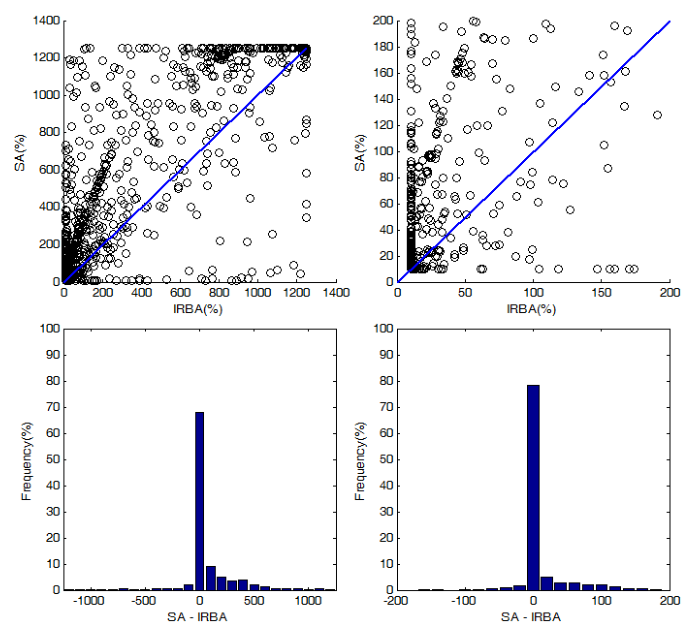
Note: The figure compares risk weights implied by the re-scaled formulae- based capital approaches proposed by EBA (2015a) for our dataset of 1,771 European securitisation tranches. In the upper panels of the figure, each point represents a comparison between the STS SEC-SA risk weights (shown on the vertical axis) and the STS SEC-IRBA risk weight (on the horizontal axis) for the same individual tranche. The left hand panel contains a scatter plot for all the tranches in our dataset while the right hand panel shows a scatter plot only for those tranches that have risk weights less than 200% under both approaches being compared, i.e. the higher credit quality segment of the market. The lower panels of the figure show the frequency distribution of the gap between the rescaled STS SEC-SA and STS SEC-IRBA risk weights.
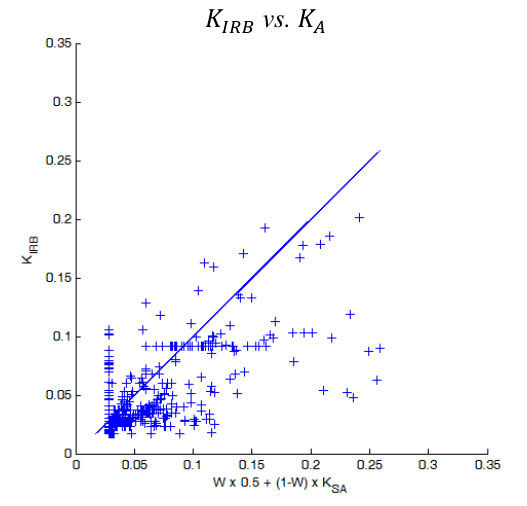
Note: The figure compares pool capital measures ( on the vertical axis and on the horizontal axis) for our dataset of 1,771 European securitisation tranches. = 1 − × + × 0.5 is the pool capital input in the SSFA in SEC-SA. Here, is the cumulative delinquency rate of the pool.
| a) | Most senior |
|---|---|
| b) | Mezzanine |
| c) | Junior tranches |
Note: This table displays weighted averages for the Most Senior, Mezzanine and Junior tranches of three asset classes under a number of proposed regulatory approaches. Weighted averages are based on par values. Results are given for three securitisation sub-sectors: RMBS, SME loan backed and Other Retail loan backed securitisations. All tranches considered are rated to permit comparison with RBA and SEC- ERBA. Averages are provided for two existing Basel II approaches, the RBA and the SFA, the three BCBS 303 approaches: SEC-IRBA, SEC-ERBA and SEC-SA, and for their variants following EBA (2015b) rescaling. See Duponcheele, Linden and Perraudin (2014) for details on the dataset and methodologies used to determine the risk weights.
4. Other issues
Capital treatment for junior mezzanines: a source of capital arbitrage
In this section, we pick up several issues which remain poorly treated in the Commission’s proposed European implementation of BCBS 303 even after the adjustments suggested by the EBA. The first of these points is the capital treatment of mezzanine tranches, in particular junior mezzanine tranches (whose detachment point is generally below 1 times pool capital).
Any rigorous risk model used to calibrate tranche risk weights will yield weights less than full deduction levels for tranches just below pool capital, KIRB or KA. This applies for models like the industry framework proposed by Duponcheele, Linden, Perraudin and Totouom- Tangho (2014) but also for the numerical model used by the Basel RSW to calibrate risk weights in BCBS (2013).
From early in the development of Basel securitisation capital rules, however, regulators have included an override in that thin tranches attaching anywhere up to pool capital have been subject to 1250% risk weights in formulae-based approaches.[22] The consequence of this regulatory override in the SFA over the years has been extensive regulatory capital arbitrage as tranches have been much more expensive in capital than is justified by their risk as perceived by the market.[23]
In devising the BCBS 303 rules, the RSW replaced the SFA formula with the ad hoc SSFA in which the same erroneous deduction up to pool capital is enforced. Risk weights for tranches attaching above tranche capital are determined by an exponential smoothing function governed by the parameter p. If the aim of the regulatory community had been to improve consistency between approaches and to remove regulatory arbitrage opportunities, the opportunity should have been taken to rectify the “1250% RW up to Pool Capital” problem.
Duponcheele, Linden and Perraudin (2014) show how a simple Adjustment Factor may be inserted in the SSFA to correct this issue. This approach has the advantage that it permits a more conservative approach for tranches attaching just above pool capital without generating excessive capital non-neutralities.
Capital treatment for senior mezzanines: a source of capital requirement volatility
In SEC-SA, in the SSFA formula, the parameter ‘a’ of the exponential function allocates to senior mezzanine tranches (with an attachment point generally above 1 times pool capital) the capital surcharge (p*KA). The pool capital input, KA, depends on KSA and W. While we agree that W makes the formula more risk sensitive for the junior mezzanine tranches, Duponcheele, Perraudin and Totouom-Tangho (2015b) argued that KSA would have been preferable to KA in the parameter ‘a’ to avoid the creation of volatile capital requirements for senior mezzanine tranches that contain the tail of the capital distribution. From a prudential point of view, W is risk weighted at 625%. By construction, the capital amount, i.e. 0.5*W, impacts the most junior tranche and potentially the junior mezzanines, but does not impact the senior mezzanines. An economic description of the above explanation is that, in a securitisation, provisions or losses are at the bottom of the waterfall, not in the middle. A similar issue is present in SEC-IRBA, as the KIRB definition contains provisions on defaulted assets.
This technical point affects only certain jurisdictions, such as Spain or Portugal, and only certain types of assets where late or delayed payments are not unusual and classified as regulatory “default” even though investors do not consider them as a major cash flow risk.
For the European market as a whole, we do not consider this senior mezzanines issue to be as material as the issue affecting the junior mezzanines.
Tranche Maturity – an anti-European provision
A highly regrettable new feature of the BCBS 303 rules which is again not corrected in the Commission’s proposals is the dependence of risk weights on “tranche maturity”. Tranche maturity influences SEC-IRBA and SEC-ERBA risk weights, but interestingly, not SEC-SA risk weights. This constitutes another advantage in our view of the SEC-SA.
“Tranche maturity” creates two problems. First, “asset maturity” and not “tranche maturity” is the relevant risk factor for tranche credit losses. Specifically, the relevant time-dependent risk factor for a securitisation tranche is the “Weighted Average Life (WAL) of the pool of securitised assets”. This is the risk factor that investors follow closely when investing, as it determines the overall amount of potential losses that a securitisation will bear. This is also the main time-dependent risk factor that will impact a tranche.[24] Regulators have not wished to allow banks to generate estimates of WALs because this would involve modelling and probably some judgment[25]. But, in the absence of WALs, tranche maturity is a very poor substitute and one that has the potential to inject significant noise into securitisation capital calculations.
Second, “tranche maturity” necessarily reflects the legal system of the jurisdiction in which the pool assets are originated. Using this as a driver for risk weights, introduces, by the backdoor, additional capital requirements for European jurisdictions with lengthy legal procedures (most notably Italy and Portugal). This is clearly against the spirit of the European Single Market.[26]
Let us explain in more detail the de-facto “anti-European” feature of what is proposed. In the Commission’s proposals for Article 257 of the CRR it is stipulated that: “tranche maturity” can be defined either as “a) the weighted average maturity of the contractual payments due under the tranche” or “b) the final legal maturity of the tranche” moderated by a 80% coefficient. With the proposals, almost all real economy securitisations (“where the contractual payments due under the tranche are conditional or dependent upon the actual performance of the underlying exposures”) need to calculate “tranche maturity” according the “final legal maturity” as in (b).
When structuring a securitisation, arrangers will take into account the portfolio behaviour of the pool of assets in designing the liability structure (tranches). One technical point that arrangers need to address is the “final legal maturity” of the tranches. There are 3 key elements which are taken into account in this process: 1) The replenishment period (sometimes called the reinvestment period); 2) The longest possible final legal contractual cash flow in the pool of assets (based on covenants); and 3) The length of the judicial process in the jurisdiction where the assets are originated. The final legal maturity will be typically the sum of these 3 components.
The judicial legal process in Italy is commonly understood to take between 5 and 7 years. Italian assets, even very short term trade receivables, will, therefore, always be assessed with a 5 year maturity, as the tranche legal final maturity will be far in the future. However, countries, such as the UK, where the judicial legal process is between 12 and 18 months, will benefit from lower levels of capital.
The maturity definition, in effect, means that capital depends not solely on the risk parameters of the portfolio, but also on the length of the judicial process in a given country. Within Europe, this technical factor could well be considered as a potential hidden barrier to trade. In any case, it is definitively against the spirit of the European Single Market.
It is instructive to analyse the role of tranche maturity in the SEC-IRBA formula (as stated in the Commission’s proposed text for Article 259 of the CRR). In fact, most of the capital surcharge of the SEC-IRBA Retail framework (residential mortgages, auto loans, consumer loans, credit cards, etc[27]…) is attributable to effects of coefficient E of the formula
Modified Supervisory Formula Approach (MSFA), the maturity that is being used in the equations of the Working Paper 22, is clearly the “asset maturity”, capped at 5 years. This is the notion, and correctly so, used in the modelling of the “Pool Cash Flows”. However the first proposal from Basel (BCBS 236) used the assetmaturity designed MSFA and switched in the formula the “asset maturity” by a “tranche maturity”. Unfortunately, only synthetically referenced assets or instrument on credit indices, all with the same bullet asset maturity, typically found in correlation trading books, will be able to match bullet maturities of the assets with the same bullet maturity for all the tranches. For real world assets found in banking books, underpinning lending to borrowers in the real economy, the two notions are fundamentally different. The switch from “asset maturity” to “tranche maturity” is not based on any economic, financial or prudential justification. Ever since, in the path-dependent creation of regulatory rules, Basel 3 is using the incorrect notion of “tranche maturity” in SEC-IRBA (and SEC-ERBA). 27 In the IRB methodology, the length of the work-out process affects the LGD of a defaulted asset. The LGD is calculated by discounting the recovery proceeds with the relevant interest rate over the work-out period. The magnitude of this discount is influenced by the length of the judicial process. LGD is explicitly used in the determination of KIRB, and taken into account by the rating agencies in attributing a rating to the tranche in question. Therefore, both SEC-IRBA and SEC-ERBA already take into account this economic reality. To add yet determining p (24% surcharge per tranche maturity year for senior tranches and 27% surcharge per tranche maturity year for non-senior tranches). The SEC-IRBA Wholesale framework is also affected, but not to the same extent, as the contribution to the surcharge equals 7% per tranche maturity year.
It is remarkable that, in the case of the Retail framework, the main determinant of the capital surcharge in the SEC-IRBA, which is supposedly the more advanced approach compared to the SEC-SA, is an entirely questionable maturity effect. Why a 5-year SME Retail securitisation would have a marginal tranche maturity contribution to the capital surcharge of 135% (= 5 years x0.27) whereas a 5-year SME Wholesale securitisation would have 35% (= 5 years x0.07) is anyone’s guess. In this, as in other features of the SEC-IRBA calibration, no transparency has been provided by regulators and risk specialists are in the dark. To reiterate, the fact that SEC-SA risk weights do not depend on tranche maturity is one reason for viewing it as superior to the SEC-IRBA and the SEC-ERBA.
How may one expect the market to adjust to the role of tranche maturity in determining risk weights? One may anticipate that, whenever possible, retail securitisations, including STS transactions, for which “tranche maturity” affects the capital surcharge, will be structured with “artificially” low tranche maturity (below 5 years).[28] Furthermore, transactions, including STS transactions, will move down the path of US RMBS, with a high number of time-tranched tranches, ideal for trading books. In both cases, we think that this is not a prudent approach for the European securitisation market.
In our view, since the STS legislation is a European solution for mostly European high quality securitisations, the incentives created by the use of “tranche maturity” should be removed altogether, or their numerical impact, at least limited.
Calibration of SEC-IRBA – Rewarding Poor Asset Performance
One of the strangest aspects of the proposed prudential regulation for securitisation is the numerical calibration provided by the RSW for SEC-IRBA. This has been adopted without much modification for STS securitisations. One may note that all the “C” coefficients in the table contained in Article 259 are negative. The consequence of this is that, as KIRB increases, ceteris paribus, the capital surcharge p, decreases. In other words, low credit quality pool assets (such as US subprime mortgages), attract a lower capital surcharge. From a prudential point of view, one could well expect the opposite. We suspect that the numerical values presented in the paper reflect the results of using a linear regression of the parameter p on a skewed set of tranches in a somewhat mechanistic fitting exercise that has little to do with risk or the nature of tranches in the market.
We have shown in Duponcheele, Perraudin and Totouom-Tangho (2014b) that the parameter p depends non-linearly on risk factors. It is impossible to judge the reasonableness of the linear regression reportedly employed by the RSW (and adopted in an unchanged form by the
more capital because of the length of the judicial process, via the tranche maturity, without this being reflective of the underlying economic reality, does not make sense. 28 An investor in an Italian trade receivable deal, for example, will face the undesirable choice of either taking on more risk for less capital (by setting up a short UK-style final legal maturity and “giving up” the legal entitlement to the recovery proceeds that cannot be received via the legal process in Italy before the expiry of the tranche final legal maturity), or of taking less risk for more capital (by maintaining a long final legal maturity so as to receive all possible cash flows obtained during the Italian work-out process).
EBA and by the Commission), as details of the calibration have not been revealed. Under recent Basel rules, great emphasis is placed on transparency and on investors understanding risks. The lack of transparency around calibration of regulatory models is regrettable. We can only point out that the SEC-IRBA calibration rewards poor quality portfolios, and that Europe is proposing to implement a legislation that has this effect. In contrast, note that SEC-SA, which is a simple and transparent formula, does not reward poor quality pools. Again, this reinforces our view that its design is superior.[29]
To assess the numerical impact of the proposed regulation, we used the same 1,771 European securitisations in Duponcheele, Linden and Perraudin (2014) for which public data is available. In the dataset, there were 221 wholesale tranches and 1550 retail tranches. The average p-value for wholesale tranches is 0.45 (i.e. a surcharge of 45%), and for retail tranches 1.19 (i.e. a surcharge of 119%).
Figure 4 shows the distribution of the p-values for the tranches backed by wholesale pools. The upper panels give the distribution as intended by BCBS 303 with no STS rescaling, without the floor (on the left) and with the floor (on the right). The lower panels give the same distribution, rescaled as per the EBA’s proposals (EBA (2015b)). It is interesting to note that for the dataset, prior to rescaling, the p-values, prior to the application of the 0.3 floor, are between 0.2 and 0.6. Once halved with the rescaling proposal, all the values are between 0.1 and 0.3. Since a floor of 0.3 applies, all the p-values are at the floor of 0.3. In a sense, for STS wholesale securitisation, the RSW’s formula with the coefficients A, B, C, D and E, de-facto, does not apply. Simplifying the STS capital surcharge proposal to a p-value of 0.3 would have been simpler, but more importantly, transparent.
Figure 5 shows the distribution of the p-values for the tranches backed by the retail pools. The panels present results for retail pools comparable to those for wholesale pools in
Figure 4. Prior to rescaling, the p-values are between 0.6 and 1.4, with an average of 1.2. Once halved with the rescaling proposal, all the values are between 0.3 and 0.7, with an average of 0.6. Since a floor of 0.3 applies, the distribution does not change.
Figure 5 highlights two problems:
1) The distribution is skewed with the retail pools of the best credit quality having the highest p-values. This is the effect of the C coefficient.
2) The average p-value for the retail pools (1.2 for non-STS and 0.6 for STS securitisations) will be higher than the p-value of SEC-SA (1.0 and 0.5 respectively). This is the effect of the E coefficient discussed earlier.
While for non-STS securitisations, these problems are the result of the RSW’s decisions on the A, B, C, D and E coefficients (influenced by their unpublished calibration methodology), there is no reason why Europe should adopt for the STS framework the same formula, even halved. Halving a questionable capital surcharge formula does not bring transparency as to what is being done.
The EBA’s proposal to halving the p parameters has the effect of somewhat alleviating the numerical impact of a questionable formula. In the case of the wholesale framework, it clearly eliminates completely the impact of the formula, to the point that it would be simpler to set p=0.3 for all wholesale STS securitisations, as shown in Figure 4. In the case of the STS retail framework, a similar approach could be taken, with a value to be determined by policy-makers. But, to maintain coherence within the STS framework, that value should be in a range between the 0.3 floor and a 0.5 cap corresponding to the p-value of STS SEC-SA.
Is there a need to distinguish between senior and non-senior in SEC-IRBA in the context of a European Simplified, Transparent and Standardised framework? We do not believe so. The dataset we use contains 550 senior tranches and 1,221 non-senior tranches, across wholesale and retail pools. Before any STS rescaling, the average p-value for senior tranches is 1.03 and for non-senior tranches 1.12. In essence, 1.03 is very close to the 1.0 value of the SEC-SA. Table 1 also provides numerical evidence that for senior tranches, the average risk weights obtained for SEC-IRBA and SEC-SA are at 16%, close to the floor of 15%. When the p-value is halved for the STS calculation, to an average of 0.515 in STS SEC-IRBA, all the risk weights are at the floor of 10%, the same as STS SEC-SA where p=0.5.
SEC-SA does not differentiate between senior and non-seniors, in non-STS and STS mode. STS SEC-IRBA for the wholesale pools will almost always give a p-value at the floor of 0.3, regardless of seniority. STS SEC-IRBA for the retail pool could also be simplified (so as not to reward poor asset performance) by having a fixed value of p, and there would be no need to differentiate between senior and non-senior.
Conditions of use of SEC-IRBA and SEC-SA – Specific cases where those methods are not appropriate
We have highlighted in earlier papers potential sources of regulatory arbitrage, either in existing rules or proposed future regulations. Well-designed rules should aim to reduce regulatory arbitrage incentives and opportunities. Those opportunities might simply arise from not defining the conditions of use of such rules.
It appears that Article 258, paragraph 2 of the Commission’s proposals aims to do just that. In particular, it disallows the use of the SEC-IRBA in circumstances in which use of the SSFA formula would be inappropriate. However, the paragraph could potentially be interpreted in a way that is not intended by regulators. We, therefore, believe it requires some clarification through authoritative guidelines that could be issued by the EBA.[30]
Nevertheless, the circumstances raised in this paragraph 2 are not limited to SEC-IRBA, they are also concerns of SEC-SA. We suspect that the reason why the “conditions of use”
(or “anti-arbitrage clauses”) of paragraph 2 have not been extended to SEC-SA in the Commission’s proposals, is that there is no fall-back approach for the SEC-SA in the current hierarchy. If the latter cannot be used, risk weights go straight to the fourth level in the hierarchy, i.e. 1250%. It would be much better to extend the “conditions of use” to SEC-SA, and when SEC-SA is disallowed by the regulators, the SEC-ERBA could play its role as a fall-back position.
Other considerations: Self-certification, ABCP and Level playing fields
Another major impediment to the revival of the market is the issue of “self-certification” for STS securitisations. The “self-certification” approach is opening up a series of issues such as different interpretations of the STS criteria, risk of severe penalties for originators, uncertainty on the actual capital charge for investors[31]. The combination of these issues will create powerful disincentives for originators to issue STS securitisations and for investors to buy STS tranches. The implementation of third party certifiers under a framework defined and monitored by regulators would incentivise originators to go through the additional expenses and operational procedures[32] needed to obtain the STS label for their securitisations, rather than ignoring the efforts of the Commission to bring simplicity and transparency to the market by voluntarily deciding to issue without the STS label.
Concerning ABCP conduits, the Commission’s proposals could lead to unintended consequences for the financing of the European economy. There are many issues with the proposed STS criteria for ABCP conduits both at transaction and programme level. For instance, at transaction level, the proposed maturity limitations exclude auto loans and leasing assets. At programme level, the requirement that every transaction in the ABCP conduit meet all the STS criteria is not realistic from an operational point of view. Additionally, for investors, securitisation risk is removed from ABCP conduits fully supported by the sponsoring bank, as they have recourse to the sponsor. The requirement that all securitisations are STS in such “dual recourse” ABCP conduits is not needed, as the risk profile of such products are more analogous to short-term covered bonds.
The ABCP market is the one market where having a non-functioning STS label could actually disrupt, rather than revive, the market. Contrary to ABS issuers, ABCP issuers may face severe consequences if they do not obtain the STS label. Indeed, the draft EU Money Market Funds (MMF) regulation requires that only “high quality” ABCP paper be bought by European MMF funds. If “high quality” was to be defined as “STS”, then European ABCP issuers will be shut from the European MMF market that currently provides the bulk of their funding. The funding of the European economy will become thus more dependent on US MMF funds. We are aware that industry experts on ABCP are preparing detailed technical answers to the Commission to propose pragmatic solutions to these issues.
Our last point concerns level playing fields. In the Explanatory Memorandum of the Commission’s proposals explaining the STS rationale, and in the section “Due diligence rules for investors (Article 3)”, it is stated that “Since securitisations are not always the simplest and most transparent financial products and can involve higher risks than other financial instruments, institutional investors are subject to due diligence rules.” While we would always recommend that due diligence be performed, the first part of the sentence could be challenged from an investor point of view, as:
a) Senior positions in European ‘traditional’ securitisations are no less safe than covered bonds alternatives. Both are on balance-sheet instruments (most of ABS are not deconsolidated) secured funding instruments (via legal “ring fencing” or contractual “true sale”); securitisation specific risk stems from prepayment uncertainty (the pass through structure is linked with the ALM-perfect nature of securitisation, while a covered bond may carry substantial structural ALM imbalance). In an ABS, the more the prepayment on a given collateral, the more the structural credit enhancement, the less the default risk for a given senior securitisation tranche of a pass-through security. This structural feature is absent from most covered bonds. When choosing between a senior securitisation tranche and a covered bond, an investor will make a trade-off between “structural enhancement” and “dual recourse”.
b) An SPV’s balance sheet is simpler than most credit institution balance sheets on which recourse applies.
c) Securitisation reporting is more transparent than most covered bonds reporting on ring-fenced assets and reporting on credit institutions balance sheets.
d) True sale in a securitisation is a lot simpler to analyse than the many complex legal frameworks for covered bonds.
Nevertheless, the due diligence requirements put on institutional investors is much greater for securitisations than for the more complex covered bonds, and is, paradoxically, at its greatest for the simplest securitisations, namely STS securitisations.
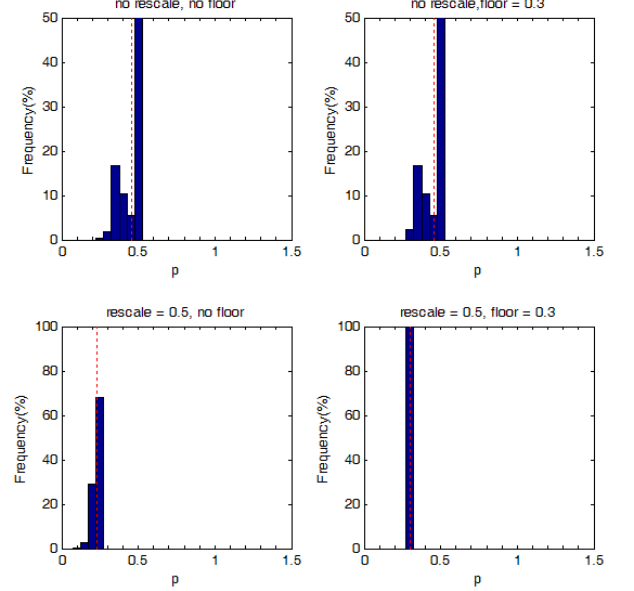
Note: The figure shows histograms for SEC-IRBA p values (under different assumptions) for the 211 corporate or wholesale tranches in our dataset. Top left shows the distribution without imposing floor of 0.3 and without EBA (2015)-style rescaling. Top right shows results with a 0.3 floor but no rescaling. Bottom left shows rescaling but no floor. Bottom right shows the distribution with both rescaling and a 0,3 floor. The wholesale pools in the European dataset generate p-values between 0.3 and 0.6. The key point to notice is that rescaling the p values (by halving) for STS rescaling, leads all p values to be at the floor of 0.3.
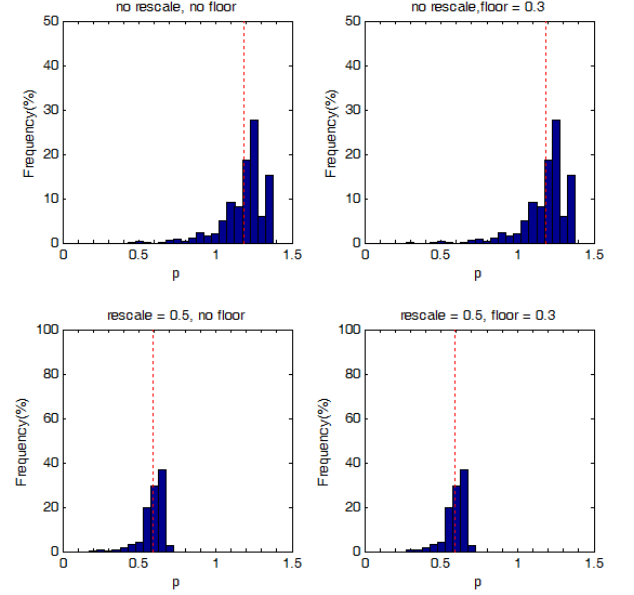
Note: The figure shows results similar to those in Figure 4 except for retail securitisations, for the 1,550 retail tranches in our dataset. The retail pools in the European dataset generate p-values between 0.3 and 1.4, with an average of 1.2. The pools with the best credit quality generate the highest values of surcharge (as a reminder p=1.5 is used for re-securitisations). Halving them for STS rescaling, all the p-values are between 0.3 and 0.7, with an average p=0.6. This average value is greater than p=0.5 for STS SEC-SA.
5. Conclusion
This note presents comments on the Commission’s 30th September proposals for reviving the European securitisation market. The proposals are well-intentioned and are the outcome, we believe, of extensive analysis by technical staff within the European regulatory community on appropriate ways to adjust the Basel rules contained in BCBS 303 for the European market.
Our basic message is that some problems remain lurking in the details of what the Commission has proposed, and that these problems may prevent the package of measures from having the intended effect of reviving the market. Specifically, the Commission follows the EBA’s recommendation to maintain the BCBS 303 hierarchy of approaches for calculating tranche risk weights.
While the BCBS 303 hierarchy is not a problem for some jurisdictions[33], it has significant adverse implications for the European market. The difficulty that European IRB banks are likely to have in calculating inputs to the SEC-IRBA, combined with the fact that SEC-ERBA is de facto the top of the hierarchy for SA banks, means that, in all probability, the ratings-based SEC-ERBA will remain the dominant approach in Europe for calculating securitisation capital.
The rating agencies’ view of risk for European bank loans is totally different from that of regulators. This leads to radical differences between the risk weights implied by ratings-based and formulae-based approaches. This, in turn, creates distortions across asset classes. It also implies a very uneven playing field for US and European banks investing in European securitisations since, post Dodd-Frank, US banks may only use the formulae-based approaches.
A solution would be for Europe to alter the position in the hierarchy of approaches of the SEC-ERBA and the SEC-SA. A variety of reasons (inter alia the risk sensitivity of the SEC-SA, its broad consistency with the SEC-IRBA, its independence of a questionable driver, tranche maturity) make the SEC-SA preferable to the ratings-based alternative. SEC-ERBA should be employed as a fall back for complex transactions for which the conditions of use of a formulae-based approach are not met.
The Commission is clearly aware of the impact that capital rules dependent on agency ratings had on the EU securitisation market. Its proposals include a derogation that the SEC-SA may be used ahead of the SEC-ERBA for a particular securitisation exposure if banks can show that capital requirements determined with SEC-ERBA are “not commensurate” with the credit risk of the underlying pool. This derogation is a positive development, as it equips European IRB and SA banks with a regulatory mechanism to deal with the problem caused by the ratings dependency. But as it stands, this derogation creates a lack of clarity, and divergent approaches taken by national regulators could jeopardise a correct functioning of the market. A simpler approach, that would more predictably restart the market, would be to reverse the positions of the SEC-SA and SEC-ERBA in the hierarchy with a derogation for the use of the SEC-ERBA when appropriate.
As well as advocating this change, we point out issues and problems inherited by the Commission’s proposals from BCBS 303. The main ones include the treatment of junior mezzanines, the incorrect use of tranche maturity as a risk driver, the calibration of the SEC-IRBA and some aspects of the limits placed on the use of the formulae-based approaches.
Finally, it is interesting to consider the possible use of STS securitisations in determining eligibility for the Liquidity Coverage Ratio (LCR). If, given additional criteria, some STS securitisations (ABS and ABCP) were to be included in the Level 2A bucket[34], originators and investors would look at STS as a multi-faceted label (and not just as a securitisation product that has a limited advantage in capital requirements to be balanced against the many constraints that come with the label). STS securitisations would become a financial instrument in their own right, occupying a place between non-STS securitisations and covered bonds. Such a change, fully supported by statistical evidence (see Perraudin (2014a)), would not only help revive the European securitisation market, but would also ensure that this revival is driven by issuance of STS securitisations.
References
Bank of England and European Central Bank (2014a) “The Impaired EU Securitisation Market: Causes, Roadblocks and How to Deal With Them,” Bank of England and European Central Bank Joint Statement, April, available at: http://www.bankofengland.co.uk/publications/Pages/news/2014/070.aspx
Bank of England and European Central Bank (2014b) “The Case for a Better Functioning Securitisation Market in the European Union: A Discussion Paper,” Bank of England and European Central Bank Joint Publication, May, available at: https://www.ecb.europa.eu/pub/pdf/other/ecbboe_case_better_functioning_securitisation_marketen.pdf
Basel Committee on Banking Supervision (2012) “Revisions to the Basel Securitisation Framework,” Consultative Document, Bank for International Settlements, December, (also known as BCBS 236), available at: http://www.bis.org/publ/bcbs236.pdf
Basel Committee on Banking Supervision (2013c) “Revisions to the securitisation framework,” Consultative Document, Bank for International Settlements, December, (also known as BCBS 269), available at: http://www.bis.org/publ/bcbs269.pdf
Basel Committee on Banking Supervision (2014) “Revisions to the securitisation framework,” Basel III Document, Bank for International Settlements, December, (also known as BCBS 303), available at: http://www.bis.org/bcbs/publ/d303.pdf
Board of Governors of the Federal Reserve System (2013), “Implementing the Supervisory Formula Approach for Securitization Exposures,” October, available at: http://www.federalreserve.gov/bankinforeg/basel/files/bcc1307.pdf
Duponcheele, Georges, William Perraudin and Daniel Totouom-Tangho (2013a) “A Principles-Based Approach to Regulatory Capital for Securitisations,” BNP Paribas mimeo, April, available at: http://www.riskcontrollimited.com/insights/a-principles-based-approach-to-regulatory-capital-forsecuritisations/
Duponcheele, Georges, William Perraudin and Daniel Totouom-Tangho (2014b) “Calibration of the Simplified Supervisory Formula Approach,” BNP Paribas mimeo, March, available at: http://www.riskcontrollimited.com/insights/calibration-of-the-simplified-supervisory-formulaapproach/
Duponcheele, Georges, Alexandre Linden, William Perraudin and Daniel Totouom-Tangho (2014) “Calibration of the CMA and Regulatory Capital for Securitisations,” BNP Paribas mimeo, April, available at: http://www.riskcontrollimited.com/insights/calibration-of-the-cma-and-regulatorycapital-for-securitisations/
Duponcheele, Georges, Alexandre Linden and William Perraudin (2014) “How to Revive the European Securitisation Market: a Proposal for a European SSFA,” BNP Paribas mimeo, December, available at: http://www.riskcontrollimited.com/insights/how-to-revive-the-european-securitisationmarket-a-proposal-for-a-european-ssfa/
Elul, Ronel, (2011) “Securitization and Mortgage Default,” Working Paper 09-21R, Federal Reserve Bank of Philadelphia, May, available at: http://www.elul.org/papers/securitization.pdf
European Banking Authority (2014) “Discussion Paper on simple, standard and transparent securitisations,” (EBA/DP/2014/02), October, available at: https://www.eba.europa.eu/documents/10180/846157/EBA-DP-2014- 02+Discussion+Paper+on+simple+standard+and+transparent+securitisations.pdf
European Banking Authority (2015a), “EBA Technical Advice on Qualifying Securitisation”, Public Hearing Event, June, available at: https://www.eba.europa.eu/documents/10180/1116637/EBA+technical+advice+on+qualifying+securi tisation+-Public+Hearing+Event+June+26+2015+%28final%29.pdf
European Banking Authority (2015b) “EBA Report on Qualifying Securitisation – Response to the Commission’s Call for Advice of January 2014 on Long-term Financing,” July, available at: https://www.eba.europa.eu/documents/10180/950548/EBA+report+on+qualifying+securitisation.pdf
Perraudin, William (2013) “Agency Cost Arguments for Non-Neutrality in Securitization Capital,” Risk Control 13-81a 19-07-2013 v3
Perraudin, William (2014a) “High Quality Securitisation: An Empirical Analysis of the PCS Definition,” July, available at: http://www.riskcontrollimited.com/insights/high-quality-securitisationan-empirical-analysis-of-the-pcs-definition/
Notes
[1] Dr. Georges Duponcheele is Head of Banking Solutions, BNP Paribas. Alexandre Linden, CFA, is a Senior Quantitative Structurer, BNP Paribas. Dr. William Perraudin is Director of Risk Control Limited and Adjunct Professor of Imperial College, London. Correspondence may be sent to the authors at: georges.duponcheele@bnpparibas.com, alexandre.linden@bnpparibas.com, or william.perraudin@riskcontrollimited.com.
[2] The authors thank Fabrice Susini for his support and helpful comments and all those who contributed to discussions. Any errors are ours. The views expressed are the authors’ own and not necessarily either those of BNP Paribas or those of individuals with whom we had discussions or their firms.
[3] The pool capital is adjusted in the SEC-SA formula by the delinquency factor W to add risk sensitivity.
[4] Very limited use by European banks of IRB formulae-based approaches like the Basel II Supervisory Formula Approach (SFA) and, in the future SEC-IRBA, except when the banks are originators or sponsors
[5] Article 259, paragraph (b) of existing CRR (2013)
[6] These information requirements are detailed in Chapter 3 of the existing CRR (2013) which remains unchanged under the 30th September proposals.
[7] Dodd-Frank stated in section 931(5) that inaccurate credit ratings on structured financial products “contributed significantly to the mismanagement of risks by financial institutions and investors, which in turn adversely impacted the health of the economy in the United States and around the world.”
[8] The informal collaboration between risk quantitative analysts specialising in securitisation capital from major international banks is known as the “AFA quant group”. Models generated by the group over the years comprise, for global rules, the Principles-Based Approach or Arbitrage-Free Approach (AFA), the Simplified AFA (SAFA), the Conservative Monotone Approach (CMA), and for European rules, the European SSFA and the Pool Capital Multiplier Approach (PCMA). Papers generated by the group may be found at http://www.riskcontrollimited.com/insight-category/afa-capital/.
[9] The rejection by the Basel Committee of the earlier complex approach of BCBS 236 for the IRB securitisation framework reflected the influence of a high level Basel sub-committee, the Task Force on Simplicity and Comparability, the views of which are set out in BCBS 258.
[10] The p parameter used in the SEC-IRBA is defined as p = max [0.3; (A + B*(1/N) + C* KIRB + D*LGD + E*MT)] where N is the effective number of pool exposures, LGD is the exposure-weighted average pool loss-given- default, MT is the maturity of the tranche and A, B, C, D and E are parameters specified in a lookup table that differentiates between wholesale and retail and among different levels of seniority.
[11] The summit declaration stated: “We committed to reduce reliance on external ratings in rules and regulations. We acknowledged the work underway at the BCBS to address adverse incentives arising from the use of external ratings in the regulatory capital framework, and at the FSB to develop general principles to reduce authorities’ and financial institutions’ reliance on external ratings. [..]” (Appendix II, Paragraph 27).
[12] In May 2013 the European Parliament and Council adopted regulation on credit rating agencies which included reduction of reliance on credit ratings as a stated aim. Article 6 of the May regulation states: “The
[14] Comparing risk weights implied by the BCBS 269 rules, 83.4% of tranches had higher capital under the SEC- ERBA than under the SEC-IRBA while 69.4% had higher capital under the SEC-ERBA than under the SEC-SA. The general picture is of one of incoherence with the relative average risk weights for different asset classes varying substantially.
[15] In a footnote, the EBA suggests that its findings are biased by the fact that the exercise uses EDW tranches lacking in mezzanines and with larger first loss tranches, and that the estimate value should be 14%.
[16] One exception is auto loans backed securitisations. The SEC-ERBA generates less capital for this asset class in large part because ratings take into account structural protection features such as excess spread which regulatory formulae do not.
[17] This relationship holds true for the non-STS SEC-IRBA and SEC-SA, as shown in Duponcheele, Linden and Perraudin (2014d), Figure 11, panel a.
[18] One might argue that the “burden of proof” should be the other way round in that one would have to explain why a ratings agency’s view is better than a regulator’s view.
[19] See section 4 of this paper on the “anti-arbitrage clauses” contained in Article 258, paragraph 2.
[20] See section 4 of this paper on the “anti-arbitrage clauses” contained in Article 258, paragraph 2.
[21] A positive feature of the RSW’s revamp of the Basel II RBA as expressed in the risk weights of SEC-ERBA (Article 261, Table 2, Non-Senior (thin) tranche) is that the risk-weights for the Credit Quality Steps 14, 15 and
[16] (equivalent to B+, B and B-) are at 950%, 1050% and 1130% respectively. This adjustment represents a clear attempt to enhance risk sensitivity (as charges exhibit a clear progression in rating) and more importantly reduces them below 1250%. For STS securitisations (see Article 262, Table 4), the equivalent relevant risk weights are 800%, 880% and 950%, which are also risk sensitive and well below 1250%. 22It is notable that this has not been true of ratings-based approaches. For some securitisation tranches, coming from US deals viewed favourably by rating agencies, the capital weights implied by the current RBA or the intended future SEC-ERBA are distinctly lower than 1250%.
[23] During the crisis, some jurisdictions such as the UK, aware of this regulatory arbitrage, disallowed these types of transactions and restricted use of the SFA.
[24] More information can be found on how “asset maturity” (and not “tranche maturity”) changes the allocation of capital to tranches (Duponcheele, Perraudin and Totouom-Tangho (2013c)).
[25] One of the transparency requirements in the Commission’s proposals, in Article 10 of Chapter 3, is for the originator or sponsor to provide a liability cash flow model to investors on an on-going basis. There is no incentive for investors to actually use those models. The model could have been used to determine the proper risk parameter “weighted average life of the pool of assets”. We see this as a missed opportunity to move away from the erroneous concept of “tranche maturity” imposed by the Basel RSW.
[26] When Basel started on the revised framework for securitisation, it wanted a single approach for trading books and banking books. This was reflected in a key technical element: the notion of capital, as unexpected losses determined by the marginal value at risk at 99.9% in banking books was abandoned and replaced by the notion of the expected shortfall present in trading books. The expected shortfall is calibrated using market risk notions, such as the price variation of a securitisation tranche, and that variation is dependent on spread and weighted average life of that tranche. When devising the first model underpinning the revised framework, the
[29] Removing the regulatory rewards for “poor asset performance” should be fairly straightforward in the proposed legislation, at least for STS securitisations as STS securitisations have their own dedicated articles.
[30] To take an example relevant for clause 2 (a), we could have a transaction where the capital KIRB is calculated using a pool EAD at 100. Meanwhile, principal proceeds are used in the waterfall to pay interest to tranches. As a result, the credit enhancement calculated on principal only is indeed eroded ceteris paribus, as after such payments the EAD of the pool drops below 100. This is an example where attachment and detachment points are hard to evaluate. Technically it would be inappropriate to employ the SEC-IRBA (and SEC-SA) in this case. However, in those cases where assets are accounted for at book value below 100, then the portion of principal up to the discount (100 minus book value) can be used to pay interest to tranches; in such a case there is no erosion of the credit enhancement (and SEC-IRBA or SEC-SA could apply). These are highly technical points, best explained in guidelines.
[31] There is no notion of materiality in the Commission’s proposals. For example, a single consumer loan in a securitisation of 10,000 consumer loans could fail the risk weight threshold in Article 243, paragraph 2(c) (iii). Does that single asset jeopardise the STS treatment for an investor? Does it trigger criminal sanctions for the originator? We do not think so. But some investors or originators might not wish to take the risk. As a granularity threshold is required in paragraph 2(b), maybe this could be the basis for the definition a materiality threshold.
[32] It is likely that risk departments of originators will want to impose capital requirements against STS issuances due to the operational risk that those STS operational procedures represent.
[33] The Basel RSW rules are attempting to service the needs of a diversity of countries with widely different use of securitisations. Some jurisdictions are known to be ratings-friendly such as Japan – but Japan has its own domestic rating agencies catering for the local needs. The use of ratings by some countries should not imply that significant use be made of agency ratings in Europe via the Basel RSW’s securitisation hierarchy.
[34] In a similar manner that covered bonds were made eligible to the Level 1 bucket, given specific criteria in addition to Level 2A requirements. Duponcheele, Georges, William Perraudin and Daniel Totouom-Tangho (2013b) “Maturity Effects in Securitisation Capital: Total Capital Levels and Dispersion Across Tranches,” BNP Paribas mimeo, September, available at: http://www.riskcontrollimited.com/insights/maturity-effects-in-securitisation-capital-total-capital- levels-and-dispersion-across-tranches/ Duponcheele, Georges, William Perraudin and Daniel Totouom-Tangho (2014a) “Reducing the Reliance of Securitisation Capital on Agency Ratings,” BNP Paribas mimeo, February, available at: http://www.riskcontrollimited.com/insights/reducing-the-reliance-of-securitisation-capital-on-agency- ratings/ Perraudin, William (2014b) “Quantitative Impacts of BCBS 269 Securitisation Capital Approaches,” Risk Control Limited Report, 14-73a, August, available at: http://www.riskcontrollimited.com/insights/quantitative-impacts-of-bcbs-269-securitisation-capital- approaches/ Perraudin, William (2015a) “Risk Control Comment on An EU framework for simple, transparent and standardised securitisation,” 15-53a Risk Control Limited Note, May, available at: http://www.riskcontrollimited.com/insights/consultation-eu-framework-securitisation/ Perraudin, William (2015b) “Risk Control Comment on EBA Proposed Capital Rules,” 15-84a Risk Control Limited Note, August, available at http://www.riskcontrollimited.com/insights/eba-proposed- capital-rules/ Peretyatkin, Vladislav and William Perraudin (2004) “Capital for Structured Products,” Risk Control Limited Report, November, available at: http://www.riskcontrollimited.com/insights/capital-for- structured-products/